Male vs Female Hair Loss: What’s the Difference?
Hair loss is one of the most common concerns for both men and women. While it may look similar at first, men usually see receding hairlines while women experience thinning parts and loss of volume.
Hair loss is one of the most common concerns for both men and women. While it may look similar at first—strands in the shower drain or a thinning part—the way it develops and the reasons behind it are worlds apart. It isn’t just about "going bald"; it’s about how your biology reacts to hormones, stress, and time.
At Advanced Gro Hair & Skin Treatments, we see the frustration hair loss causes every day. Understanding whether you're dealing with a temporary setback or a genetic trait is the first step to getting your thick hair back.
The "Mirror Test": How Patterns Differ
If you look in the mirror, the "shape" of your hair loss usually tells the story.
-
For Men: It’s almost always a game of borders. Most men see their hairline slowly creeping backward, often forming that classic "M" shape at the temples. You might also notice a "monk’s patch" starting at the very top (the crown). It’s predictable, but it can be aggressive.
-
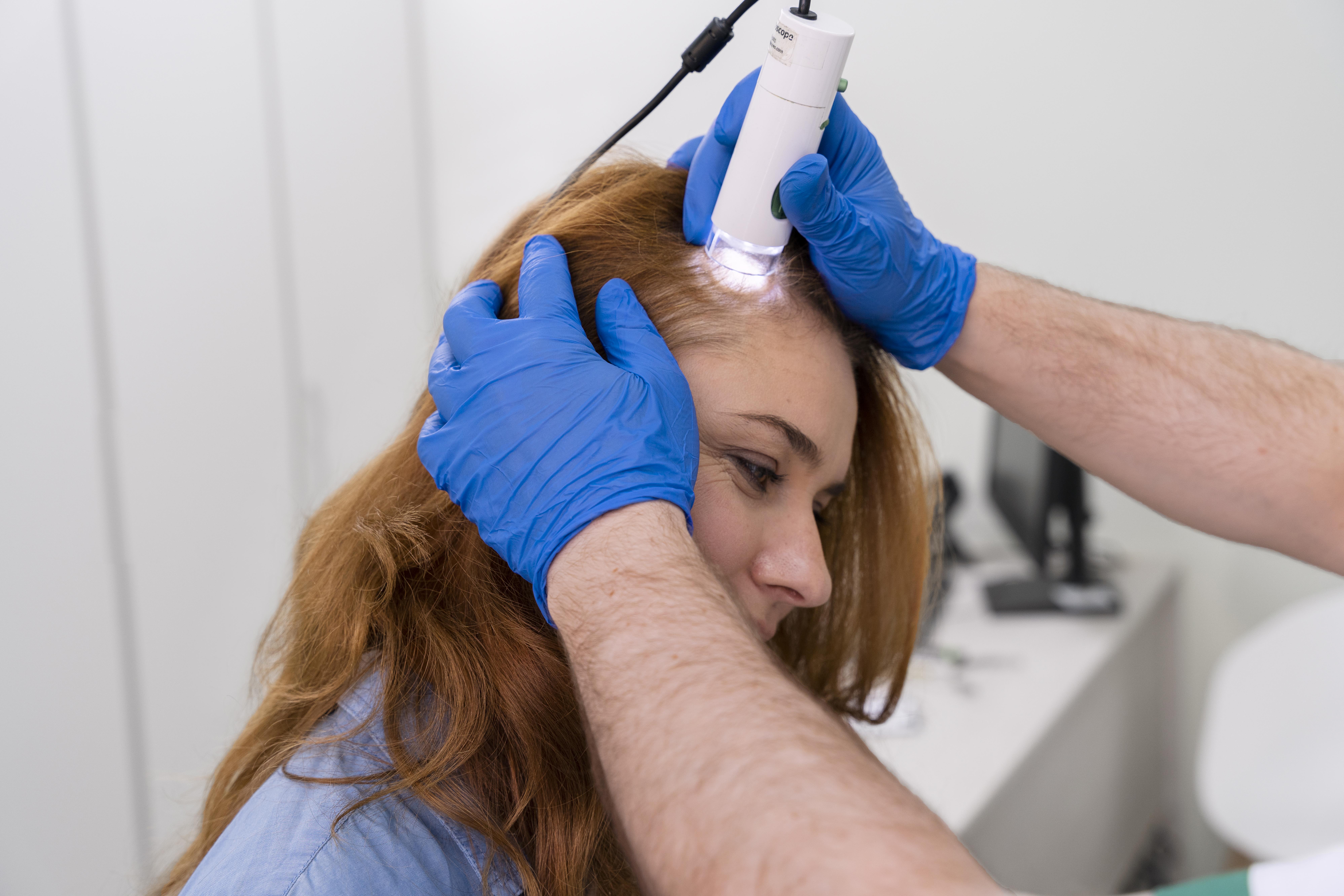
For Women: It’s rarely about the hairline. Instead, women usually notice their "ponytail feels thinner" or their middle part is looking wider than it used to. It’s a diffuse thinning that happens all over the top of the head, though thankfully, total baldness is quite rare for women.
What’s Happening Under the Surface?
The "why" is just as important as the "where."
In men, the primary villain is usually DHT, a hormone that essentially tells your hair follicles to shrink until they disappear. In women, the triggers are often more complex. While genetics play a role, we frequently see hair loss tied to hormonal shifts—like the "shed" that happens after pregnancy or the thinning that arrives with menopause. Stress, iron levels, and even how tightly you wear your hair (traction alopecia) are also major factors for women.
When Does It Start?
Time isn't always on our side. Men can start seeing a receding hairline as early as their late teens or early 20s. For women, while it can happen anytime, it’s most common to see a shift during major life transitions when estrogen levels fluctuate.
Solutions That Actually Work
We don’t believe in "miracle" drugstore shampoos. Real results come from clinical treatments that target the root of the problem:
-
PRP Therapy: We use your own growth factors to "reboot" tired follicles. It’s one of our most popular ways to thicken existing hair.
-
Mesotherapy: Think of this as a localized super-vitamin for your scalp, delivered exactly where it’s needed.
-
Hair Restoration: For areas where the hair has checked out for good, a transplant can move healthy follicles to the thinning spots for a permanent fix.
Your Hair, Your Plan
The most important thing to remember is that you shouldn't treat your hair loss based on a generic blog post. Every scalp is different. At Advanced Gro Hair & Skin Treatments, we take the time to look at your specific pattern and health history before recommending a path forward.
The Bottom Line Hair loss can feel like losing a bit of your identity, but you don't have to just "deal with it." Whether it's a receding hairline or a widening part, the earlier you act, the better your results will be.